
Should some knowledge not be sought on ethical grounds?
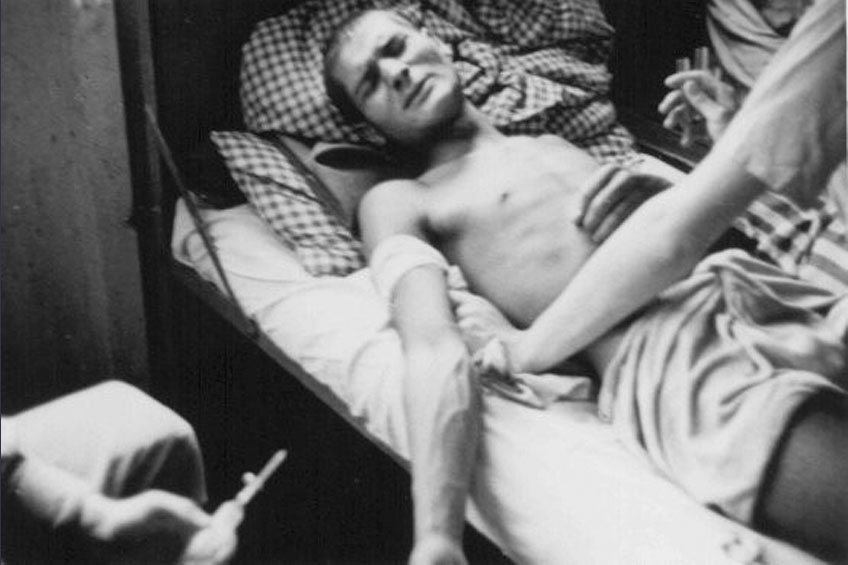
My first object is a photograph of a Nazi Concentration Camp inmate undergoing a medical experiment. This photograph is part of a display on Nazi Human Experimentation at the online United States Holocaust Memorial Museum.
This photograph shows how the Nazi regime was keen to explore the boundaries of human health in order to produce youth who would be part of a master race. In keeping with this aim, they undertook inhuman experiments on concentration camp inmates, including examining the effect of excessive saline water on the body – as demonstrated in the photograph above.
The Nazi experiments, though heinous, did yield valuable knowledge about sterilization, artificial insemination, and the impact of saline water, water pressure and high altitudes on the human body. However, despite the valuable knowledge obtained about the limits of the human body, experimentation of this sort would not be permitted today, because of the irreparable damage such experimentation does to mental and physical health of the subjects of the experiment.
This leads to the conclusion that when the cost is human well-being, there is some knowledge we should seek on ethical grounds.

My second object is a stock image poster on the use and value of a Stem Cell. This is an image used by students to learn about the uses of Stem Cells. Stem Cell research began several decades ago but was since the most potent type of stem cells were embryonic stem cells, this research was considered unethical by religious groups who feared this would encourage abortions or embryo farming and funding for stem cell research was restricted in the USA until President Barack Obama lifted the ban.
When Stem Cell research began again, the full value of embryonic stem cells was discovered and cures for previously untreatable diseases such as Alzheimers, Cancer, Multiple Sclerosis and more appeared on the horizon. This prompted the negotiation of a middle ground where scientists were given permission to use certain kinds of embryos such as those left over from invitro fertilisation or stem cells found in umbilical cord blood to drive the research further. Stem Cell research was legalised with those limitations .
This compromise satisfied moderates in both groups – those concerned about ethical boundaries being crossed and those desiring to use Stem Cells to improve human health.
This object is valuable as it shows us a case that in some cases even though ethical boundaries might be questioned, if the potential value to human society outweighs the harm, it is sometimes possible to reach a compromise that will protect ethical considerations to an extent, yet simultaneously allow the production of knowledge to continue.
